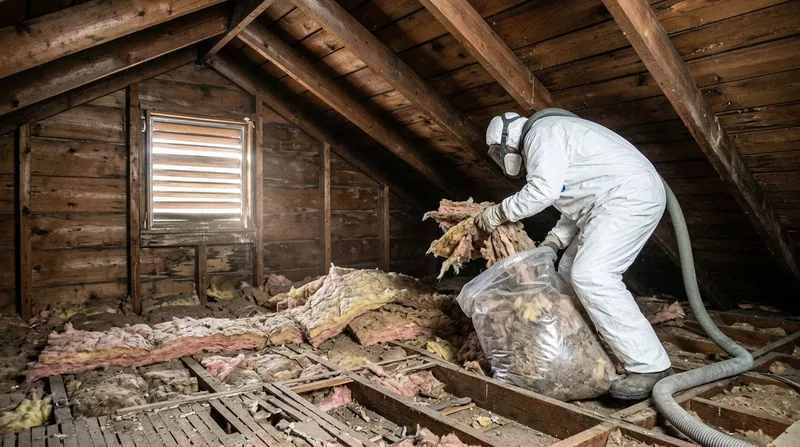




Denver's brick bungalows, mid-century ranches, and newer homes across the metro share a common problem: old insulation that has failed. After decades of cold winters and the wide temperature swings of climate zone 5B, fiberglass and cellulose in attics settle flat, lose their R-value, and leave your home fighting heat loss every season. Insulation removal in Denver is the first step toward a properly insulated home, whether you plan to install spray foam, blown-in fiberglass, or another solution. We remove failed insulation from attics, walls, and crawl spaces across Denver, Aurora, Lakewood, and the surrounding metro so you can start fresh with material that actually performs. Since 2013, we have cleared thousands of square feet of old material to make room for better insulation and tighter air sealing. The work is dusty and labor-intensive, but it is not optional if you want the retrofit to work.
Why Insulation Removal Matters in Denver's Older Homes
Denver's residential stock tells the story: brick bungalows in the Highlands and Park Hill, ranches across Wheat Ridge and Lakewood, and older townhomes stretching into Englewood and Arvada. Many of these homes were built with fiberglass batts or blown-in cellulose that has had forty or fifty years to settle, compress, and lose its insulating value. Over time, moisture from winter condensation, air movement, and simple gravity cause the material to pack down into a thin, dense mat that no longer traps air effectively. A settled attic is not just inefficient; it is also a poor substrate for new insulation, whether you choose spray foam or fresh blown-in material. Removing the old material gives you a clean deck to work from and lets you install new insulation at the thickness and R-value your home actually needs.
- We extract old fiberglass batts, rolls, and loose-fill cellulose from attics without disturbing the roof deck or framing.
- We clear wall cavities and rim joist areas of failed or inadequate insulation before spray foam or injection foam retrofit.
- We remove insulation from crawl spaces to prepare for spray foam air sealing and moisture control.
- We haul all material off site and dispose of it properly, leaving your attic or crawl space ready for new work.
- We identify and flag any asbestos-suspect materials (such as vermiculite) and stop work immediately for professional testing and remediation by a licensed professional.
Proper removal is the foundation of any insulation retrofit, and it is worth doing right the first time.
Key info: Denver's brick bungalows often have 4 to 6 inches of settled fiberglass in the attic, which may have an R-value of R-6 to R-12 after decades of compression. A proper retrofit starts by removing that material and installing new insulation at R-38 to R-60, depending on your climate zone and energy goals. The City and County of Denver building code requires attics to meet current energy standards, so removal and replacement is not just a comfort upgrade, it is a code compliance step.
For details on Denver's energy code and insulation standards, see the Denver Community Planning and Development website for current building code requirements.
How We Remove Insulation in Denver: Step by Step
Insulation removal is a systematic process, not a demolition. We start with a site visit to understand what material is present, its condition, and the access available in your attic or wall cavity. From there, we plan the work to minimize dust and disruption to the rest of your home. We use commercial-grade equipment and containment where needed, and we follow a clear workflow so the job is done safely and efficiently. Once the old material is out, your home is ready for new insulation, whether that is spray foam, blown-in fiberglass, or a hybrid approach.
- We inspect the attic or wall space and identify the type, depth, and condition of existing insulation.
- We set up dust containment and mechanical ventilation to keep debris out of living spaces and the HVAC system.
- We carefully remove old fiberglass, cellulose, or mineral wool and place it in heavy-duty bags for disposal.
- We sweep and vacuum the deck or framing to remove loose fibers and debris.
- We inspect the substrate for any damage, moisture, or pest activity and flag issues that need repair before new insulation goes in.
- We haul all old material off site and dispose of it according to local Denver waste guidelines.
- We provide a written summary of what was removed, the depth and approximate R-value of the old material, and recommendations for the next step.
This structured approach means your home is not left in a dusty, half-finished state, and you have a clear picture of what comes next.
Example: A 1960s ranch in Arvada has 5 inches of settled fiberglass in the attic with no air sealing. We remove all of it, vacuum the attic floor, and find a few gaps around the top plates and penetrations. The homeowner then chooses to install spray foam to seal those gaps and add R-value in one step, rather than layering blown-in fiberglass over a leaky attic. That retrofit, from removal through new foam installation, takes two to three days and delivers both air sealing and insulation in a single project.
Learn more about what comes after removal by visiting our Attic Spray Foam Insulation page or Insulation Replacement and Re-Insulation services.
Insulation Removal Methods: Attic, Wall, and Crawl Space
| Method | Description | Best for |
|---|---|---|
| Attic Removal | Manual extraction of fiberglass batts, rolls, or blown-in cellulose using containment, vacuum capture, and hand tools. Deck is swept and vacuumed after material is removed. | Brick bungalows, ranches, and homes with vented attics. Most common retrofit scenario in Denver. |
| Wall Cavity Removal | Extraction of insulation from wall cavities via small access holes or from the exterior during renovation. Requires careful framing inspection before new foam or fiberglass is installed. | Pre-1980 homes with inadequate or failed wall insulation. Retrofit without full demolition. |
| Crawl Space Removal | Removal of old fiberglass or mineral wool from rim joists, band joists, and band board. Often paired with moisture assessment and foundation wall inspection. | Basements and crawl spaces across Denver metro. Entry point for spray foam air sealing and rim joist insulation. |
| Asbestos-Suspect Material Flagging | If vermiculite or other asbestos-suspect insulation is identified, we stop work immediately so an asbestos abatement specialist can handle testing and removal. | Homes built before 1980 with vermiculite attic insulation or vintage pipe wrap. Safety-critical protocol. |
Each method is tailored to the material, the space, and the retrofit plan that follows. We do not use a one-size-fits-all approach; we assess the job on site and choose the technique that leaves your home cleanest and most ready for new insulation.
Insulation Removal Cost in Denver: What to Expect
The cost of insulation removal in Denver depends on the size of the space, the type and depth of material, and the access available. An attic removal in a typical Denver bungalow or ranch runs from $950 to $2,500, depending on square footage and complexity. Crawl space and rim joist removal is often a smaller job, starting around $600 to $1,200. Wall cavity removal and large commercial spaces are priced on an estimate basis because the scope varies widely. We provide a written estimate with a clear breakdown of labor, disposal, and any additional work flagged during inspection, so there are no surprises.
- Square footage of the attic or wall space is the primary cost driver; larger homes take longer and involve more material to haul.
- Type of insulation affects removal speed; loose-fill cellulose is faster to extract than fiberglass batts, which are slower than blown-in mineral wool.
- Access and ceiling height matter; attics with low rafters or tight crawl spaces take longer and require more careful work.
- Condition of the material influences the job; heavily settled, wet, or contaminated insulation requires extra care and may require protective equipment or decontamination.
- Disposal and haul-away are included in our estimate; we remove all material from your site and dispose of it at an approved facility.
The best way to know what your removal will cost is to call us for a free estimate. We will visit your home, assess the scope, and provide a firm quote within 24 hours.
For a full breakdown of our pricing across all services, visit our Pricing page. If you are ready to move forward, contact us at (720) 235-5710 or use our Contact and Free Estimate form.
Insulation Removal Near Me: What to Look for When Hiring a Contractor in Denver
Choosing the right contractor for insulation removal is important because the quality of the removal directly affects the quality of the retrofit that follows. You want a contractor who understands the local Denver building code, has experience with the type of material in your home, and can explain what they found and what comes next. Here are the key things to verify before you hire anyone.
- Verify that the contractor is fully insured and can provide a current certificate of insurance before work begins.
- Ask for references from at least two recent removal projects in Denver or nearby areas, and follow up with at least one reference.
- Request a written estimate that includes the square footage, type of material, depth, estimated R-value of the old insulation, and a firm price for removal and haul-away.
- Confirm that the contractor understands Denver building code requirements for attic ventilation and thermal barriers, and can explain how your retrofit will meet code.
- Check whether your HOA has any restrictions on exterior work or attic access, and make sure the contractor is aware of those rules before the job starts.
- Ask about the contractor's process for handling asbestos-suspect materials like vermiculite; the right answer is immediate stop-work and referral to a licensed professional, never an attempt to remove it themselves.
- Confirm that the estimate is free and that there is no obligation to proceed with new insulation after removal; removal and retrofit can be scheduled separately if you prefer.
A reputable insulation contractor will answer these questions clearly and provide documentation before any work begins. If a contractor avoids these topics or rushes you into a decision, that is a red flag.
Ready to get started? Call us at (720) 235-5710 or visit our Contact page to request your free, no-obligation estimate.
Insulation Removal in Denver: Pricing Guide
| Service | Price | Details |
|---|---|---|
| Attic insulation removal | Starting at $950 | Typical Denver bungalow or ranch attic, 800 to 1,200 sq ft, includes material extraction, cleanup, and haul-away |
| Crawl space and rim joist removal | Starting at $600 | Removal of fiberglass or mineral wool from basement rim and band joists, foundation wall inspection included |
| Wall cavity removal (retrofit) | Starting at $1,200 | Extraction of insulation from pre-1980 home walls via access points, framing and moisture assessment included |
| Large or complex removal | On estimate | Commercial spaces, multi-story attics, or heavily contaminated material requires on-site inspection before pricing |
| Travel and site visit | Included | No separate charge for estimates or travel within Denver and surrounding service area metro |
| Free estimate | Free | Written quote provided within 24 hours, no obligation to book removal or retrofit work |
Indicative pricing, the exact cost depends on square footage, finish, and site access. Free personalized estimate within 24h at (720) 235-5710.


