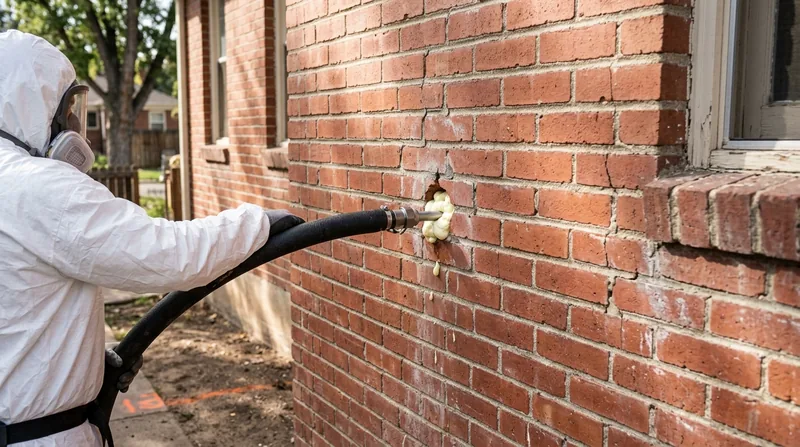




Wall & Injection Foam Insulation in Denver is the retrofit answer for brick bungalows and older homes across the Highlands, Park Hill, and Washington Park where opening walls for insulation is not an option. Denver's residential stock spans decades of construction methods, and the pre-1980 brick and masonry homes that define much of Denver County sit over uninsulated cavities that leak heat steadily through long, cold winters and wide day-to-night temperature swings. Injection foam fills those cavities without demolition, patching small holes to match the existing brick or plaster. For homeowners in Wheat Ridge, Arvada, Lakewood, and Englewood with similar older stock, this method preserves the home's character while cutting drafts and energy loss. We drill, fill, and patch so the work is invisible when done. Air sealing around injection points ensures the entire envelope tightens, not just the wall cavities themselves.
Why Wall and Injection Foam Matters in Denver's Older Neighborhoods
Denver's brick bungalows and Denver squares were built to last, but they were not built to today's energy standards. The cavity walls in these homes were often left empty or filled with sawdust and newspaper, materials that settled flat decades ago. The result is steady heat loss through the foundation walls and rim joists, and cold air seeping in around every door and window frame. Front Range winters push hard against these gaps, and the chinook winds that swing through Denver County in spring and fall exploit every penetration. Injection foam addresses this directly: it fills the cavity completely, creates an air barrier, and does so without touching the exterior brick or interior plaster.
- Fills empty wall cavities in brick and masonry homes without exterior or interior demolition.
- Seals air leaks and thermal bypasses that fiberglass batts cannot reach or compress against.
- Preserves the original appearance and character of historic and period homes in Denver neighborhoods.
- Works in tight spaces and around existing utilities, plumbing, and electrical runs.
- Cures to a solid, permanent state that does not settle, compress, or lose R-value over time.
This is the insulation method that makes sense when a full wall remodel is not in the budget or not desired.
Key info: A Highlands brick home with uninsulated 2x4 cavities loses roughly 15 to 20 percent of its heating energy through the walls alone. Injection foam can reduce that loss by 60 to 70 percent, a meaningful drop that shows up in the heating bill and the home's comfort from November through March.
For more on how to seal the thermal envelope beyond walls, see our rim joist and band joist insulation page, which covers the basement perimeter where many older Denver homes leak the most heat.
How We Install Wall and Injection Foam in Denver Homes
Injection foam installation is a controlled, methodical process that respects the existing structure. We assess the wall cavity depth, locate utilities and obstructions with a borescope, and plan injection points to ensure complete fill. Small holes (typically 1.5 to 2 inches) are drilled at intervals along the wall, foam is injected under low pressure to fill the cavity from bottom to top, and holes are patched with foam backing and finish material matched to the existing wall. The entire process takes one to three days depending on wall footage and accessibility. Mechanical ventilation is run during cure to manage off-gassing, and the home is aired out before reoccupancy. This is not a weekend DIY job; it requires equipment, technique, and site-specific knowledge that only a trained crew brings.
- We inspect the wall cavity with a borescope to confirm depth, obstructions, and moisture before drilling.
- Injection points are marked at 16 to 24 inch intervals to ensure complete fill without voids.
- Foam is injected at controlled pressure and flow rate to fill from the bottom cavity up.
- Holes are patched with foam backing board and finish material matched to brick, plaster, or siding.
- Mechanical ventilation runs during cure, and we provide a clear re-entry window before the home is occupied.
The result is a wall cavity that is fully insulated, air-sealed, and invisible from the street or the living room.
Example: A Park Hill bungalow with 1,200 square feet of exterior wall cavity can be injected in two to three days. Patch work and finish matching take another day. Total cost is typically $2,400 to $3,600, depending on cavity depth, wall condition, and finish material selected. That same home retrofitted with blown-in insulation from the exterior would require scaffolding, exterior cladding removal, and re-cladding, a much larger scope and cost.
For comparison on other wall and cavity insulation methods, see our closed cell spray foam page, which covers the performance and cost of sprayed foam in new wall construction and major remodels.
Wall and Injection Foam Methods: Choosing the Right Approach
| Method | Description | Best For |
|---|---|---|
| Closed Cell Injection Foam | High-density foam injected into cavities at low pressure; R-value 6 to 7 per inch; cures rigid and moisture-resistant. | Masonry and brick walls where moisture risk is present or cavity depth is shallow; maximum R-value in minimum space. |
| Open Cell Injection Foam | Lower-density foam injected into cavities; R-value 3.5 to 4 per inch; cures soft and permeable to vapor. | Wood-frame walls with deeper cavities (2x6 or larger) where cost is a factor and vapor permeability is acceptable. |
| Blown-In Cellulose or Fiberglass (Retrofit) | Loose-fill material blown into cavities from exterior or interior; R-value 3 to 3.5 per inch; settles over time. | Budget-conscious retrofit where exterior access is available and settling risk is acceptable; not recommended for masonry. |
| Spray Foam in New Construction or Major Remodel | Closed or open cell foam sprayed directly into wall framing before drywall; R-value 6 to 7 (closed) or 3.5 to 4 (open) per inch. | New walls, major renovations, or additions where cavity depth is known and walls are open during construction. |
For Denver's older brick homes, closed cell injection foam is the standard choice because it delivers high R-value in shallow cavities and resists moisture in masonry. Open cell injection is used in wood-frame homes where deeper cavities allow for lower cost. Blown-in materials are cheaper but settle over decades, making them a poor choice for the long-term performance Denver homeowners expect.
Wall and Injection Foam Insulation Cost in Denver: What to Expect
Wall and injection foam insulation in Denver typically runs from $2 to $4 per square foot of wall cavity, depending on cavity depth, foam type, wall condition, and finish patching. A 1,200-square-foot exterior wall with 2x4 cavities (shallow, typical of Denver bungalows) costs $2,400 to $4,800 for material and labor. A larger home with 1,800 square feet of wall and deeper 2x6 cavities may run $3,600 to $7,200. The cost factors that move the estimate up or down are straightforward: deeper cavities require more foam and longer injection times, walls with existing damage or poor finish require more patching work, and masonry with mortar joints requires careful drilling and sealing to avoid water intrusion. Getting two to three estimates is essential because every home is different, and a crew that inspects with a borescope and gives you cavity depth and foam type in writing is giving you a real bid, not a guess.
For a detailed pricing overview and to request a free estimate, visit our pricing page or call (720) 235-5710 for an on-site assessment. We respond within 24 hours and never charge for the estimate.
Wall and Injection Foam Insulation Near Me: What Denver Homeowners Should Know When Hiring
Hiring a spray foam contractor for wall injection is a straightforward process, but it pays to verify a few things before work begins. First, confirm that the contractor is fully insured and ask for a certificate of insurance naming you as an additional insured; call the insurance company to verify the policy is active. Second, ask for an estimate that includes cavity depth, foam type (closed or open cell), R-value per inch, and total board feet of foam planned. A bid with no R-value spec and no thickness is a red flag. Third, ask whether the contractor will run mechanical ventilation during cure and what re-entry window they recommend; any crew promising immediate occupancy is cutting corners on safety. Fourth, check references from recent jobs in your neighborhood; a Park Hill contractor should have Park Hill references, not just generic testimonials. Fifth, understand that permits for wall injection vary by city and building official, so ask your contractor what applies at your address and defer to the Denver building department or your city's equivalent for final clarity. Sixth, if your home is in a historic district or has HOA restrictions, confirm that the patching and finish work will meet those standards before the estimate is locked.
- Request a written estimate with cavity depth, foam type, R-value, and total board feet of material.
- Verify full insurance coverage and ask for a certificate naming you as additional insured.
- Ask about mechanical ventilation during cure and the re-entry window before occupancy.
- Get references from recent jobs in your neighborhood or similar home type.
- Confirm with your city or building department whether permits are required for wall cavity insulation.
- Discuss finish patching and color matching before work begins so expectations are clear.
A local, insured contractor who takes time to inspect, educate, and bid in writing is the standard you should expect. For a free estimate and to discuss your home's specific needs, contact us or call (720) 235-5710.
Wall & Injection Foam Insulation in Denver: Pricing Guide
| Service | Price | Details |
|---|---|---|
| Closed Cell Injection Foam | Starting at $2.50/sq ft | Best for masonry and brick walls; includes borescope inspection, drilling, foam injection, and patch work |
| Open Cell Injection Foam | Starting at $2/sq ft | Best for wood-frame walls with deeper cavities; lower cost than closed cell with adequate R-value for retrofit |
| Finish Patching and Color Matching | Included | Patch material, backing board, and finish coat matched to existing brick, plaster, or siding at no extra charge |
| Full Wall Retrofit (1,200 to 1,800 sq ft) | On estimate | Scope, cavity depth, and wall condition vary; on-site inspection required before final bid is given |
| Travel | Included | No separate mileage or travel fee within Denver metro and surrounding service areas |
| Free Estimate | Free | Borescope inspection, cavity assessment, and written bid within 24 hours at (720) 235-5710 |
Indicative pricing, the exact cost depends on square footage, finish, and site access. Free personalized estimate within 24h at (720) 235-5710.


