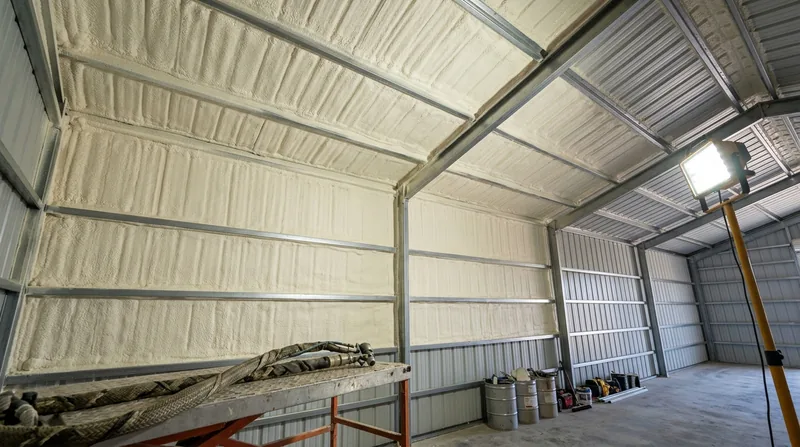




Metal Building & Barndominium Spray Foam in Denver solves a problem unique to Colorado's high-altitude climate: metal structures face intense day-to-night temperature swings that create condensation on the interior skin, rust, and heat gain that bakes the building all summer long. Across Weld and Douglas counties, where agricultural operations, hobby farms, and modern barndominiums are expanding rapidly, metal buildings are the standard structure type, yet most sit uninsulated or poorly sealed. We spray closed-cell foam directly to the metal skin and purlins to stop condensation at the source, cut summer heat load, and create a thermal and moisture barrier that metal alone cannot provide. The Front Range's low humidity and wide temperature range make this work straightforward and effective, without the moisture complications of coastal climates. This guide walks you through why metal building insulation matters in Denver, how the work is done, what to expect to pay, and how to verify any spray foam contractor you hire.
Why Metal Building & Barndominium Insulation Matters in Denver's Climate
Metal buildings and barndominiums across the Denver metro and into Weld County face a specific thermal challenge: the metal skin conducts heat and cold directly into the interior space, and the wide day-to-night temperature swings typical of Colorado's climate create condensation on uninsulated metal surfaces. A metal building that sits in full sun at 85 degrees during the day can drop to 45 degrees at night, and that thermal shock causes moisture to condense on the interior, leading to rust, corrosion of equipment, and mold growth on stored goods. In summer, an uninsulated metal roof or wall absorbs solar heat and radiates it into the building, forcing HVAC systems to work harder or leaving the space uncomfortably warm. Spray foam insulation stops both problems by creating a continuous thermal barrier and an air seal that prevents warm, humid air from reaching the cold metal surface.
- Closed-cell spray foam adheres directly to metal purlins and skin, eliminating air gaps where condensation can form.
- A properly sealed metal building reduces interior temperature swings by 20 to 30 degrees, protecting equipment and inventory from moisture damage.
- Foam insulation on metal buildings cuts summer cooling load and reduces the risk of rust, corrosion, and mold growth on stored materials.
- Barndominiums with foam-insulated metal frames maintain more stable interior temperatures and lower HVAC operating costs year-round.
The result is a building that is more comfortable, more durable, and cheaper to condition in both summer and winter.
Local example: A metal equipment storage building in Weld County without insulation experiences interior condensation from late fall through spring whenever outdoor temperatures drop below 50 degrees. Once closed-cell foam is sprayed to the walls and roof, interior moisture stays in balance, rust stops forming on tools and machinery, and the owner avoids costly corrosion damage and equipment replacement.
For more context on how closed-cell foam handles thermal and moisture control, see our guide to closed-cell spray foam insulation in Denver.
Colorado building code and the local building department govern insulation requirements, ignition barriers, and thermal barriers for any metal building project. The fifteen-minute thermal barrier requirement (the distinction between spray foam that meets code and foam that does not) is enforced at the time of inspection, so always confirm what applies at your site and get your contractor's written estimate to specify the foam thickness and R-value required by code. For guidance on what Denver or your local jurisdiction requires, contact your city or county building department directly; requirements vary across the metro.
How We Spray Foam a Metal Building or Barndominium in Denver
Spraying closed-cell foam onto a metal building is a straightforward process, but it demands precision in equipment setup, material ratio, and cure conditions. The metal surface must be clean and dry before we begin, and we confirm that any moisture or standing water is addressed first. We set up spray equipment inside or adjacent to the building, mix the foam components to the manufacturer's exact ratio and temperature, and spray the foam in overlapping passes to the thickness specified in your estimate. The foam expands as it cures, filling voids and adhering to the metal skin, and we control the expansion rate and final thickness with each pass. Once sprayed, the building must be ventilated mechanically for 24 to 48 hours to allow the foam to cure fully and off-gas, and we specify a re-entry window in writing before the job begins.
- We inspect the metal structure for rust, damage, or moisture and address any issues before foam is applied.
- The metal surface is cleaned to remove dust, oil, or debris that would prevent foam adhesion.
- We spray closed-cell foam in uniform passes, controlling thickness and expansion rate to meet the R-value and code requirements in your estimate.
- Mechanical ventilation runs for 24 to 48 hours after spraying to ensure the foam cures fully and the building is safe for re-entry.
- We provide a written record of foam thickness, R-value, and the re-entry window for your records and any future inspections.
The entire process, from setup to final cure, typically takes 2 to 4 days depending on the building size and complexity.
Example from the field: A 40-by-60-foot metal shop in Arvada with open purlins and no insulation required 3 inches of closed-cell foam on the walls and roof to meet the building's thermal barrier code and to stop condensation during winter. We sprayed the foam in two days, set up continuous ventilation fans, and the owner was able to move equipment back in after the 48-hour cure window closed.
If your metal building currently has insulation that is damaged, settled, or failing, we also handle insulation removal before spraying new foam, ensuring a clean substrate and maximum adhesion.
| Approach | Description | Best for |
|---|---|---|
| Closed-cell spray foam on metal skin | High-density foam sprayed directly to purlins and metal roof or walls, creating a continuous thermal and air barrier with R-values of 6 to 7 per inch. | Metal buildings, barndominiums, agricultural structures, and equipment storage where condensation control and thermal performance are critical. |
| Foam on interior framing with air cavity | Closed-cell foam sprayed to the interior face of purlins, leaving a small air space between foam and metal skin to allow any trapped moisture to evaporate. | Existing metal buildings where the metal skin is already corroded or where maximum interior space is preferred. |
| Open-cell foam for sound dampening | Lower-density foam that absorbs sound and reduces interior noise from metal roof expansion, rain, and wind; R-value is 3.5 to 4 per inch. | Barndominiums and hobby farm buildings where occupant comfort and noise reduction are priorities, and condensation risk is low. |
| Insulation removal and replacement | We remove failed, damaged, or settled insulation, clean the metal substrate, and spray new closed-cell foam to code-required thickness. | Metal buildings with existing insulation that is wet, compressed, moldy, or no longer effective. |
Metal Building & Barndominium Spray Foam Cost in Denver: What to Expect
The cost of spray foam insulation for a metal building in Denver starts at $1.75 per square foot as a baseline, but the actual price depends on several concrete factors: the thickness required by code or by your thermal goals, the R-value specified, the condition of the metal substrate (rust, corrosion, or moisture will increase prep time), and the accessibility of the building (single-story structures are faster to spray than multi-story or complex geometries). A simple metal storage building with 2,400 square feet of wall and roof area and a requirement for 3 inches of closed-cell foam will typically run $4,200 to $5,400, while a larger agricultural building or a barndominium with multiple roof lines or interior framing complexity will move upward. Labor, equipment setup, and cure-time management all factor into the final bid, and we always provide a written estimate that specifies the foam type, thickness in inches, R-value per inch, total R-value, and the cost before any work begins.
The best way to understand your actual cost is to get two or three estimates from contractors who are willing to visit your site, measure the building, and provide a detailed written quote. Avoid any estimate that does not specify thickness and R-value, or that quotes only a per-square-foot price without explanation of what is included. Our pricing guide covers the factors that move costs up or down, and we respond to all estimate requests within 24 hours at (720) 235-5710.
What to Look for When Hiring a Spray Foam Contractor Near Me in Denver
Hiring the right spray foam contractor for a metal building or barndominium is as important as the foam itself, because poor installation, wrong material ratios, or inadequate cure time can leave you with foam that does not adhere, off-gasses for months, or fails to meet code. Start by asking any contractor for a written estimate that specifies foam thickness in inches, R-value, the foam type (closed-cell or open-cell), and the total cost. Verify that the contractor is fully insured and ask to see a certificate of insurance naming your project. Ask for references from metal building or barndominium projects completed in the past two years, and call at least two to ask about adhesion, odor duration, and how quickly the building was usable after cure. Confirm that the contractor understands your local building department's requirements for ignition barriers and thermal barriers, and ask how they will handle the inspection process. If your building is in a master-planned community with HOA rules, confirm that any exterior work meets those requirements before scheduling. Finally, be wary of any contractor who promises immediate re-entry, who quotes a price far below market without a site visit, or who cannot provide a detailed written estimate with R-value and thickness specified.
- Request a written estimate with foam type, thickness in inches, R-value per inch, total R-value, and the total cost before any work begins.
- Verify that the contractor is fully insured and ask to review a certificate of insurance that covers your project.
- Call references from metal building or barndominium projects completed in the past two years and ask about odor, cure time, and adhesion quality.
- Confirm that the contractor understands your local building code requirements for thermal barriers and ignition barriers, and ask how they will prepare for inspection.
- Ask about mechanical ventilation during cure and the stated re-entry window, which should be 24 to 48 hours, not immediate.
If you have questions about what Denver or your local jurisdiction requires, contact your city or county building department. We are ready to provide a free estimate and answer any questions about your project. Call us at (720) 235-5710 or request a free estimate online.
Metal Building & Barndominium Spray Foam in Denver: Pricing Guide
| Service | Price | Details |
|---|---|---|
| Metal building wall and roof insulation | Starting at $1.75/sq ft | Closed-cell foam sprayed to metal purlins and skin, 2 to 4 inches, includes substrate prep and mechanical ventilation during cure |
| Barndominium spray foam insulation | Starting at $1.95/sq ft | Closed-cell or open-cell foam on interior framing and metal roof, includes R-value and thickness specification, varies by thermal goals and code requirements |
| Insulation removal and replacement | On estimate | Removal of failed or damaged insulation, substrate cleaning, and new foam installation; cost depends on material volume and disposal logistics |
| Air sealing and penetration work | On estimate | Foam applied to rim, band joists, roof penetrations, or door and window frames; scope and access determine final price |
| Travel and site visit | Included | No separate travel fee or mileage charge within Denver and surrounding service areas |
| Free written estimate | Free | Response within 24 hours, includes R-value and thickness specifications, no obligation to book, call (720) 235-5710 |
Indicative pricing, the exact cost depends on square footage, finish, and site access. Free personalized estimate within 24h at (720) 235-5710.


