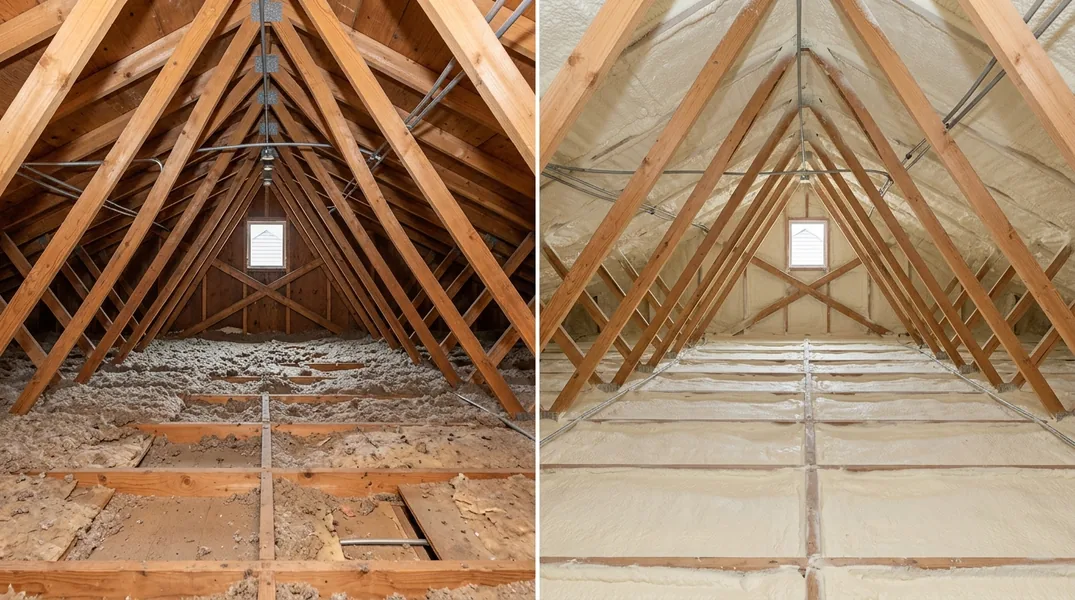
Why Brick Bungalows in Highland and South Park Hill Need Modern Insulation
The charming brick bungalows that line the streets of Highland and South Park Hill are architectural treasures. Built primarily in the early 1900s, these homes feature solid masonry construction, beautiful period details, and a sense of permanence that newer builds simply cannot match. However, many of these older homes were constructed with minimal insulation, relying instead on thick walls and natural air circulation to manage indoor temperatures. In today's climate, that approach leaves homeowners with high heating and cooling bills, inconsistent room temperatures, and uncomfortable living conditions.
Denver's elevation of 5,280 feet and variable weather patterns, from hot summers to cold, dry winters, demand effective thermal control. Older brick bungalows are particularly vulnerable to energy loss through attics, which are often poorly insulated or rely on settled fiberglass batts that have lost their R-value over decades. This is where Attic Spray Foam Insulation becomes a game-changer for homeowners seeking both comfort and energy efficiency without compromising the character of their historic homes.
Is Spray Foam Insulation Worth It for Your Bungalow?
The question of whether spray foam insulation is worth the investment depends on several factors specific to your home and situation. For brick bungalows in Highland and South Park Hill, the answer is often yes, but let's break down why. Spray foam creates an air-tight seal that traditional insulation materials cannot achieve. This means fewer drafts, less heat loss in winter, and reduced cooling load in summer. Homeowners typically see energy bill reductions of 15 to 30 percent, which can offset the initial investment within 5 to 10 years, depending on usage patterns and local utility rates.
Beyond the financial return, spray foam offers intangible benefits that matter to homeowners. It reduces noise transmission from outside, improves indoor air quality by sealing gaps where dust and allergens enter, and prevents moisture infiltration that can lead to mold and wood rot. For historic homes like those in South Park Hill, where maintaining structural integrity is crucial, preventing moisture damage is invaluable. Additionally, spray foam doesn't settle or compress over time like traditional batts, so your insulation performance remains consistent for decades. When you factor in lower energy costs, improved comfort, better air quality, and protection of your home's structure, spray foam insulation represents a solid long-term investment.
Is Spray Foam Insulation Safe? Addressing Health and Off-Gassing Concerns
Safety is a legitimate concern when considering any home improvement product, and spray foam insulation is no exception. The good news is that when installed correctly by trained professionals, spray foam is safe for homeowners and their families. The key phrase here is 'installed correctly.' During application, spray foam releases isocyanates and other volatile organic compounds (VOCs) that require proper ventilation and protective equipment. This is why professional installation matters. Technicians wear respirators, ensure adequate ventilation, and follow strict safety protocols to minimize exposure. Once cured, which typically takes 24 to 48 hours, spray foam poses no health risk to occupants.
Closed Cell Spray Foam Insulation and Open Cell Spray Foam Insulation are both manufactured to meet EPA and building code standards. Off-gassing, the release of VOCs after installation, is a common concern but typically subsides within a few days to a week. To minimize off-gassing in your bungalow, ensure your home is well-ventilated during and immediately after installation, and consider opening windows for several days afterward. If you have respiratory sensitivities or asthma, discuss this with your installer before work begins. Denver Spray Foam Insulation uses quality products from reputable manufacturers and follows all safety guidelines to protect your family and your home.
Common Spray Foam Insulation Problems and How to Avoid Them
Like any building material, spray foam insulation can present problems if not properly installed or maintained. One common issue is improper application, where foam is applied too thickly or unevenly, leading to inadequate curing and reduced effectiveness. Another problem occurs when spray foam is installed in spaces with insufficient ventilation, trapping moisture and creating conditions for mold growth. Poorly installed foam can also shrink or pull away from framing, creating gaps that compromise the air-tight seal. Additionally, some homeowners experience issues with foam expanding into areas where it shouldn't, damaging wiring, plumbing, or ventilation systems.
The best way to avoid these problems is to hire experienced, insured contractors who understand local building codes and best practices. In Denver, where homes have unique architectural features and specific climate challenges, choosing a contractor familiar with the area is essential. Denver Spray Foam Insulation has extensive experience insulating historic brick bungalows and understands how to work around existing structures, electrical systems, and ventilation needs. We conduct thorough inspections before installation, plan the application carefully, and follow up to ensure the foam cures properly. Proper installation, combined with adequate ventilation and regular maintenance, virtually eliminates the risk of spray foam problems in your home.
Spray Foam Insulation Pros and Cons: A Balanced Look
Understanding both the advantages and disadvantages of spray foam helps you make an informed decision for your brick bungalow. The pros are substantial: superior air sealing compared to traditional insulation, higher R-value per inch of material, long-lasting performance, improved energy efficiency, moisture resistance, and sound dampening. Spray foam also fills irregular spaces and gaps that batts cannot address, making it ideal for older homes with uneven framing and unconventional attic layouts. For homeowners prioritizing comfort, energy savings, and long-term durability, these benefits are compelling.
The cons are fewer but worth considering. Spray foam has a higher upfront cost than traditional insulation, typically 2 to 3 times more expensive per square foot. The installation process requires professional application, and improper installation can lead to issues. Some people express concerns about environmental impact, though modern spray foams are increasingly formulated with low-GWP (global warming potential) blowing agents. Additionally, if you ever need to renovate or access your attic for repairs, spray foam can complicate the process since it adheres firmly to surfaces. For most homeowners in Highland and South Park Hill, however, the long-term benefits and energy savings outweigh these drawbacks, especially when you work with a reputable contractor who ensures quality installation and uses environmentally responsible products.
Attic Spray Foam Insulation Cost in Denver: What to Budget
Understanding the cost of spray foam insulation helps you plan your budget and compare it fairly with traditional options. In the Denver area, attic spray foam typically costs between 1.50 and 3.50 dollars per square foot, depending on the type of foam, the thickness applied, and the complexity of your attic space. For a typical 1,500-square-foot attic, you might expect to invest between 2,250 and 5,250 dollars. While this is considerably more than blown-in fiberglass, which might cost 0.50 to 1.50 dollars per square foot, remember that spray foam delivers superior performance and longevity.
Several factors influence your specific pricing. Closed cell foam, which offers higher R-value and better moisture resistance, costs more than open cell foam but is often worth the investment in Denver's climate. The condition of your attic, accessibility for technicians, and whether existing insulation needs removal all affect the final cost. Many homeowners find that the energy savings over 10 to 15 years justify the initial investment, effectively making spray foam the more economical choice long-term. To understand exactly what your project will cost, contact Denver Spray Foam Insulation for a free estimate. We'll evaluate your specific attic, discuss your goals, and provide transparent pricing with no hidden fees. Call us at (720) 235-5710 to schedule your consultation today.
Looking for a professional spray foam insulation contractor in Denver? Denver Spray Foam Insulation responds fast for all your spray foam insulation needs.
Get a Free Quote