The Front Range Sun Problem: Why Denver Attics Overheat
If you've ever climbed into your Attic Spray Foam Insulation during summer, you know it feels like stepping into an oven. Denver sits at over 5,280 feet above sea level, which means the sun's ultraviolet rays hit with less atmospheric filtering than in lower-elevation cities. The Front Range receives approximately 300 days of sunshine annually, and that relentless high-altitude solar exposure transforms attics into thermal nightmares during summer months.
Traditional fiberglass or cellulose insulation simply cannot handle the intensity. These materials are designed to slow heat transfer, but they don't stop air leakage or radiant heat penetration. When outdoor temperatures climb into the 90s and your roof surface reaches 150 degrees or higher, conventional insulation allows that heat to radiate downward into your living spaces. Your air conditioning system works overtime, your energy bills skyrocket, and your home never quite feels comfortable. The problem compounds when you consider that most attics also contain air leaks around ductwork, electrical penetrations, and the attic hatch, all of which allow conditioned air to escape and hot air to infiltrate.
How Closed Cell Spray Foam Stops the Heat
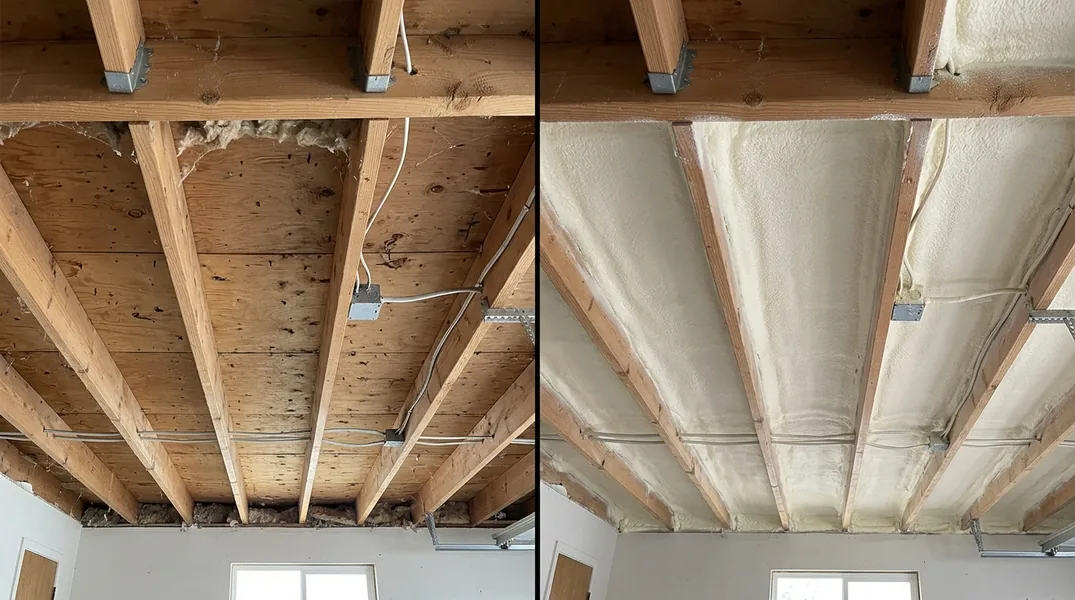
Closed Cell Spray Foam Insulation works differently than traditional insulation materials. Instead of relying solely on air pockets to slow heat transfer, closed cell foam creates an airtight thermal barrier that seals every crack, crevice, and penetration in your attic. When sprayed directly onto the underside of your roof deck, it forms a continuous layer that reflects radiant heat and prevents air infiltration simultaneously. For homeowners in Denver dealing with intense Front Range sun, this dual action is transformative.
The R-value of closed cell spray foam typically ranges from R-6 to R-7.2 per inch, which is significantly higher than fiberglass batts (R-3.2 to R-3.8 per inch) or blown cellulose (R-3.5 per inch). But the real advantage goes beyond raw R-value numbers. Closed cell foam's rigid structure and air-sealing properties mean your attic temperature stays closer to your home's interior temperature, reducing the thermal load on your HVAC system. Studies show that homes with spray foam insulation in high-altitude, sunny climates like the Front Range can reduce cooling costs by 20 to 40 percent compared to traditional insulation.
Metal Building Insulation and Barndominium Solutions
If you own a metal building, pole barn, or barndominium in the Denver area, you're dealing with an even more severe heat challenge. Metal conducts heat rapidly, and without proper insulation, metal buildings become unbearably hot under the Front Range sun. Traditional Denver-area contractors often recommend fiberglass or mineral wool for metal structures, but these materials leave thermal bridges and air gaps that render them ineffective in extreme conditions.
The best insulation for metal buildings is spray foam applied directly to the interior of the metal roof and walls. Closed cell spray foam adheres perfectly to metal surfaces, eliminates all thermal bridging, and creates a complete thermal envelope. For barndominiums and agricultural metal buildings, this means the difference between a space that is livable and one that requires constant, expensive air conditioning. Steel building insulation using spray foam also improves moisture control, preventing condensation that can lead to rust and structural damage. Whether you're converting a pole barn into a living space or need to upgrade an existing metal structure, spray foam delivers performance that no other material can match in the high-altitude Denver climate.
Air Sealing: The Hidden Benefit You Can't Ignore
Most homeowners focus on insulation R-value and miss the equally important factor of air sealing. An attic with R-60 fiberglass insulation but dozens of air leaks will perform worse than an attic with R-40 spray foam that is completely sealed. Closed Cell Spray Foam Insulation addresses both problems simultaneously. As the foam is sprayed, it expands and fills every gap, hole, and seam in your attic framing. This means air cannot infiltrate or exfiltrate, which is critical in a high-altitude location like Denver where pressure differences between indoors and outdoors are more pronounced.
Uncontrolled air leakage in attics causes several problems beyond comfort and energy waste. It allows moisture-laden air to enter the attic, which can lead to mold growth, wood rot, and structural damage. It also allows conditioned air to escape, making your heating and cooling systems work harder and wear out faster. By sealing your attic with spray foam, you protect your home's envelope, extend the life of your HVAC equipment, and create a healthier indoor environment. This is especially important in the Denver area, where dry air and intense sun create unique challenges that standard insulation simply cannot address.
Attic Spray Foam Insulation Cost in Denver: What to Budget
Many homeowners hesitate to invest in spray foam because they assume it costs significantly more than traditional insulation. While spray foam does carry a higher upfront cost per square foot, the long-term energy savings and durability make it a smart investment. In Denver, pricing for attic spray foam insulation typically ranges from $1.50 to $2.50 per board foot for closed cell foam, depending on thickness, accessibility, and the complexity of your attic layout. For a typical 1,500-square-foot attic, you can expect to invest between $8,000 and $15,000 for a complete spray foam installation.
That investment pays for itself through reduced energy bills. Homeowners in the Denver area report energy savings of 20 to 40 percent on cooling costs alone during summer months when the Front Range sun is most intense. If you're spending $150 to $200 monthly on air conditioning during peak summer, spray foam could save you $30 to $80 per month. Over a 20-year lifespan, that translates to $7,200 to $19,200 in energy savings, plus improved comfort, better indoor air quality, and protection of your home's structure. To understand your specific costs and potential savings, contact Denver Spray Foam Insulation at (720) 235-5710 to request a free estimate.
Why Professional Installation Matters in Denver's Climate
Spray foam insulation is not a DIY project. The equipment is specialized, the application technique requires training, and mistakes can compromise your entire attic's performance. In Denver's high-altitude, high-sun environment, proper installation is non-negotiable. Professional installers understand how to account for the unique thermal challenges of the Front Range, how to calculate the correct thickness for optimal R-value, and how to ensure complete coverage without over-application or gaps.
Denver Spray Foam Insulation has years of experience installing spray foam in attics throughout the Denver area, and our team understands the specific demands of local climate conditions. We use only high-quality materials, apply proper safety protocols, and guarantee our work. Whether you're dealing with an existing attic that needs upgrading or planning a new construction project, professional installation ensures you get the performance and longevity your investment deserves. If you're ready to stop turning your attic into an oven every summer, reach out to us today at (720) 235-5710 or visit our website to schedule your free estimate.
Looking for a professional spray foam insulation contractor in Denver? Denver Spray Foam Insulation responds fast for all your spray foam insulation needs.
Get a Free Quote